Adhere to Ethics in Business Operations

Integrity is WT’s most important core value and guiding business principle. The Group’s management and all employees are expected to adhere to clear ethical standards and moral conduct. This commitment extends to shareholders, banks, customers, employees, original manufacturers, and other suppliers, and represents a fundamental requirement for WT to maintain its competitive advantage and act in the right way.


Committed to ethical standards and a transparent and responsible corporate culture

WT formulated the Social Policy Code of Conduct, UNCAC Anti-corruption Policy, and United Nations Sustainable Development Goals Policies, Anti-corruption, Anti-bribery and Anti-money laundering Policy. These policies align with international corporate governance standards and anti-corruption frameworks. The social policies and codes of conduct apply to the Board members, the Group’s employees, independent contractors, suppliers, and all those who do business with WT.

In addition, The Ethical Corporate Management Best Practice Principles, Procedures for Ethical Management and Guidelines for Conduct, Codes of Ethical Conduct, and Supplier Code of Conduct that the Board has adopted are available in either the Corporate Governance section or Sustainability Report section of the Company’s official website and the Intranet in Traditional Chinese, Simplified Chinese and English. Information on Ethical Values and Professional Code of Conduct and Insider Trading Prevention Education and Advocacy are made available on the Intranet for all employees’ reference. In addition, relevant personnel are also appointed to participate in lectures and symposiums held by industrial associations or professional groups, so as to strengthen the Group’s ethical operation policies.

Preventive Measures under the Ethical Corporate Management Best Practice Principles
01 Offering and Accepting Bribes
02 Providing Illegal Political Donations
03 Improper Charitable Donations or Sponsorships
04 Offering or Accepting Inappropriate Gifts, Hospitality, or Other Improper Benefits
05 Infringement of Trade Secrets, Trademark Rights, Patent Rights, Copyrights, and Other Intellectual Property Rights
06 Engaging in Unfair Competitive Practices
07 The research, procurement, provision, or sale of products and services that directly or indirectly harm the rights, health, or safety of stakeholders.

Regular refresher training on Code of Conduct to raise ethics awareness among all employees

As part of the Group’s annual refresher training on “Ethical Values and Code of Conduct”, a total of 3,217 employees, including full-time staff, contract-based personnel, and contractor employees, completed the training and passed the assessment during the course period from September 2 to September 30, 2024, achieving a 100% pass rate.

The training and assessment covered a wide range of compliance topics, including ethical self-regulation, intellectual property rights, data protection, accurate communication, export control, anti-corruption, unfair advantage, fair competition and antitrust, conflict of interest, insider trading, whistleblowing and protection against retaliation, and disciplinary measures.

In addition, new hires are introduced to core governance and compliance policies during their onboarding training, including the Corporate Governance Best Practice Principles, Sustainable Development Best Practice Principles, Ethical Corporate Management Best Practice Principles, Code of Ethical Conduct, Procedures for Ethical Management and Guidelines for Conduct, and the Supplier Code of Conduct. They are also required to complete the online “Social Policy & Code of Conduct” training and pass the associated test within seven days of employment. Outside of the annual refresher period (September 2 to 30, 2024), a total of 232 new hires completed and passed the required training.

In 2024, the total training hours for ethics-related education reached 3,449 hours, with 3,449 participants in total, including 3,434 full-time employees (accounting for 99.57%) and 15 contractor employees (accounting for 0.43%).

  Required Participants  Completed Participants  Remarks 
Full-time employees  3,434  3,434  The acquisition of Future Electronics was completed on April 2, 2024. As a result, the 2024 training program did not yet include Future Electronics employees. Full inclusion will begin in 2025.
Contract-based staff  0 0 No contract-based employees were on board during the training period.
Contractor employees  15 15  

Ethical Management Team

HR Division
∙ Ethical operation-related training
Legal Office
∙ Legal handling of disputes
Auditing Office
∙ Handling, investigating and submitting information from the whistleblower mailbox


Implement ethics management and strengthen risk control

To improve ethical management, the Ethical Management Team was jointly formed by HR, Legal and Auditing office, and headed by the Chief Human Resources Officer. Each department is responsible for making ethical management policies, formulating and implementing relevant measures, and handling reporting procedures within their functions and responsibilities to ensure the implementation of the Ethical Corporate Management Best Practice Principles.

Ethical corporate management and anti-corruption practices

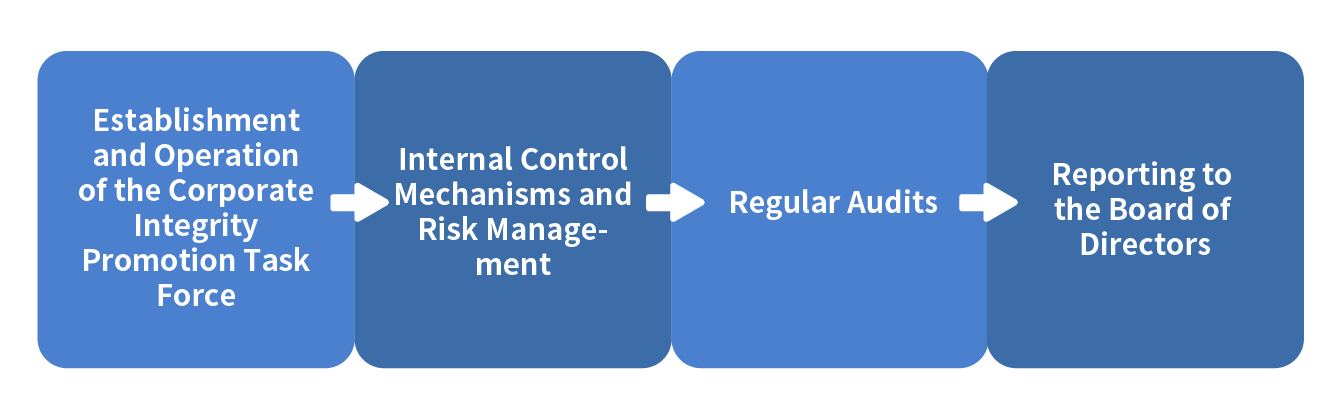
Integrity is one of WT’s core values. We uphold this principle through our ethics management practices and anti-corruption mechanisms, with the following concrete actions in place:

Establishment and Operation of the Ethical Management Team

Internal Control Mechanism and Risk Management

Regular Audits

Reporting to the Board of Directors

Implementation Measures:

1. An Ethical Management Team conducts annual training sessions for all employees, including new hires, to promote awareness of ethics policies and anti-corruption regulations.

2. Each business unit is responsible for regularly monitoring and reviewing unusual circumstances as part of daily operations. This includes periodic account reconciliation and site visits with suppliers, surveillance of suspicious transactions, detection of shell companies, irregular payment activities, and abnormal changes in logistics or delivery locations.  

3. High-risk operations are prioritized in the Company’s annual audit plan to ensure effective oversight.  

4. The Chief Human Resources Officer reports the implementation results of ethics management to the Board of Directors on a regular annual basis.  

WT has established rigorous control mechanisms for business activities and operational procedures that are potentially exposed to higher risks of unethical conduct. In addition to the regular monitoring and review of processes with a higher risk of corruption – such as those susceptible to improper benefits, bribery, or other unethical practices – the internal audit personnel also prioritize high- risk operations in the annual audit plan based on risk assessments, thereby reducing the likelihood of unethical or corrupt behavior. Furthermore, each department and subsidiary conducts annual self-assessments of internal controls to review and evaluate the effectiveness of the design and implementation of the internal control system.  

The Ethical Management Team reports annually to the Board of Directors on the implementation results of the Company’s ethics management efforts for the previous year. On January 14, 2025, the report was submitted to the Board, covering topics such as training on ethical values and professional conduct, whistleblowing cases related to ethical misconduct, and the prevention of insider trading. These report assists the Board in evaluating the effectiveness of the Company’s preventive mechanisms for ethical business practices.

No involvement in political-related initiatives and no political donations

WT has not made any direct or indirect donations to political activities, political parties/associations/NGOs, politically-related organizations, individual politicians, or other voting/referendum initiatives in the past five years. The amount of political donations has been NT$0. In addition, WT has not lobbied on specific issues or conducted related activities with interest representative groups.

Strict regulatory compliance with zero violations

WT strictly adheres to all applicable regulations in every location where it operates. Across all its operational sites, the company has recorded zero incidents of regulatory violations in the areas of economic (such as investment, securities, and taxation), environmental (including air pollution, wastewater, and waste management), and social aspects (including human rights and occupational injuries).No penalties or sanctions have been imposed by the competent authorities.

Types of Ethical Conduct Number of Cases Identified or Reported Number of Substantiated Cases After Investigation
Corruption or Bribery 0 0
Discrimination or Harassment 0 0
Conflict of Interest 0 0
Money Laundering or Insider Trading 0 0
Other 3 0

Note: WT operates under a B2B business model. Transaction data with customers does not contain personally identifiable information of the customers or their contacts. Therefore, there are no whistleblowing categories related to customer privacy.

Ensuring confidentiality in whistleblower protection and investigations

WT has a whistle-blowing system specified by the provisions of Article 23 of “Ethical Corporate Management Best Practice Principles”and Article 21 of the “Procedures for Ethical Management and Guidelines for Conduct”. Anyone who suspects or discovers a violationshould take the initiative to report it to Independent Directors, supervisors, internal audit supervisor or other appropriate person.

WT’s whistleblowing channels include an internal whistleblowe mailbox and an online whistleblowing section on the Company’s official website. These whistleblowing channels allow whistleblowers to report misconduct by Company personnel in their local language and may be used anonymously. The Auditing Office is responsible for accepting external reports, forwarding them to the heads of relevant units for investigation, and following them up until the cases are closed. The identity of the whistleblower, the content of the report, and the investigation process are kept strictly confidential. Whistleblowers are protected from improper treatment as a result of their disclosures. Complete records of the case acceptance, investigation process, and outcomes are maintained and preserved for a period of five years.

In addition, a separate whistleblower hotline and mailbox, along with a dedicated case-handling mechanism, have been established specifically for sexual harassment complaints to safeguard the privacy of complainants. If any personnel are found to have committed serious violations of ethical conduct, the Company may, depending on the circumstances, dismiss or terminate the individual in accordance with applicable laws or internal management regulations.

Furthermore, the Company regularly reiterates its whistleblowing mechanisms during annual training sessions and policy awareness programs. These include information on the reporting system, whistleblower protection against retaliation, and the designated hotline and email address for sexual harassment complaints, in order to enhance employee awareness and confidence in the reporting channels.

Whistleblowing Channels By mail to: 14F., No. 738, Zhongzheng Rd., Zhonghe Dist., New Taipei City, Taiwan
WT Official Website – Whistleblowing Section for Ethical Misconduct
Prevention of Sexual Harassment Internal Whistleblowing: TW.HR@wtmec.com |  02-82269088 ext.8966
Receiving Unit ∙ Auditing Office
∙ HR Division (Prevention of Sexual Harassment)

Enhancing Information Security

To ensure the confidentiality, integrity, and availability of WT information assets, as well as to comply with relevant laws and regulations and mitigate operational risks caused by internal and external threats, an information security policy has been established based on business needs. This policy applies to WT and its subsidiaries that are 100% directly or indirectly owned, controlled, or provide sales and services for the group. It also applies to all personnel within these organizations, including outsourced service providers, interns, and visitors. Information security clauses are incorporated into external contracts accordingly. 

Establishing a dedicated department to strengthen information security management

According to the World Economic Forum (WEF) Global Risks Report 2024, “misinformation and disinformation” rank as the number one global risk over the next two years and fifth over the next ten years. The widespread dissemination of false information makes it difficult for individuals and organizations to make accurate decisions and may increase the cost of verifying information. Meanwhile, “cyber insecurity” ranks fourth and eighth over the next two and ten years, respectively. Increasingly complex cyber espionage and cybercrime activities, such as loss of privacy, data fraud, or data theft, pose significant threats. A failure in information security defenses could lead to data breaches and ransomware attacks, or in more severe cases, disruptions to core systems that result in major operational losses and reputational damage.

In view of the growing importance of information security and the proliferation of cyber-attacks, WT Information Security Department is overseen by a Vice-President-level Chief Information Security Officer (CISO). The department is staffed with two dedicated managers and five full-time specialists. Their responsibilities, including security-risk management, incident investigation, vulnerability disclosure, and the assessment and implementation of security architectures, were reported to the Board of Directors on 5 November 2024.

During 2024, no major information security incidents involving the leakage of sensitive data or interruptions to information services occurred, and no financial losses were incurred by customers or suppliers because of security events.

To continually enhance professional capabilities in information security, the company uses the acquisition of security certifications as a performance-review mechanism.In 2024, the team earned four internationally recognized credentials – CCSP, Google CyberSecurity, CEH, and intermediate-level iPAS, covering cloud security, penetration testing, and auditing.In addition to its existing memberships in cooperative defense groups such as the Taiwan CERT/CSIRT Alliance and the Taiwan Chief Information Security Officer Alliance, the company joined the Information Service Industry Association of the R.O.C. (CISA) to share intelligence on security trends and threats, thereby strengthening its joint-defense ecosystem.

Ongoing enhancement of employee cyber-security awareness 

As traditional perimeter defenses lose effectiveness, employee awareness has become pivotal to cyber-security management. Since 2021, WT has conducted monthly social-engineering drills using random phishing templates. Employees who click on suspicious links undergo retraining and their immediate supervisors are notified; results are regularly tracked to reduce awareness-related threats. Beginning in 2024, the scope of our security-awareness training and phishing-simulation exercises was expanded to cover employees from both Excelpoint and Future Electronics.

Awareness Initiative-2024 Results

∙ Security-Awareness Training ⎯ 
Following recent acquisitions, group-wide training began in September 2024. Of 7,476 employees required to attend (136 on unpaid leave, parental leave, or resigned), 6,945 completed the course and passed the test – a 92.8 % completion rate.
∙ Social-Engineering Drills ⎯ 
278,037 phishing e-mails sent; click-through rate 0.7 %, outperforming the 5 % industry average.
∙ Advanced Professional Training ⎯ 
One intensive session delivered to core-system personnel and managers.

Strengthening the security framework to build corporate resilience

Guided by ISO 27001 and the NIST Cybersecurity Framework, WT applies defense-in-depth and secure-by-design principles across eight layers: governance, data, endpoints, applications, networks, third-party supply, business continuity & incident response, and threat intelligence & joint defense. Residual risks are continuously monitored. External ISO 27001 audits and red-team exercises validate our controls. WT holds ISO/IEC 27001:2013 and CNS 27001:2014 certificates, valid through 2025. Key 2024 actions mapped to the NIST CSF 2.0 functions are:

Govern

Regular security steering meetings brief executives on strategic goal attainment and variance analysis, ensuring alignment between cyber security and business objectives. 
Identify
Enhanced governance and policies; deployed an asset-inventory system and vulnerability scans; evaluated an external risk-management platform for threat identification and analysis. 
Protect
Classified information assets into Tiers 1-3 by sensitivity; enforced network segregation, access controls, endpoint hardening and behavioral monitoring. 
Detect
Implemented a new Endpoint Detection and Response (EDR) solution integrated with Security Information and Event Management (SIEM) and User & Entity Behavior Analytics (UEBA); big-data analytics establish behavioral baselines and accelerate anomaly detection. 
Respond
According to the incident response plan, suspicious anomalies are analyzed and assessed; once an event is verified as genuine, it is classified and handled based on its scope of impact, and the appropriate notification is issued in line with the assigned severity level. To strengthen the physical security and continuous monitoring of the data center, a digital evidence-collection mechanism has been implemented.
Recover
To reinforce the organization’s cyber-resilience and ensure that product and service delivery are not disrupted by “black-swan” or “grey-rhino” incidents, we are closing the last mile of data protection. In addition to adhering to the 3-2-1 backup principle (three copies, two different media, and one off-site location), we have also adopted an offline-media backup solution to further shorten recovery time in the event of a cybersecurity incident.

Strengthening cyber-security governance and network protection 

WT follows a “defense-in-depth” and “security-by-design” approach. Guided by Continuous Threat Exposure Management (CTEM), we proactively identify assets with vulnerable attack paths and apply risk-management controls to reduce both the likelihood and impact of incidents. Our 2024 cyber-security controls include the following:

Threat Intelligence / Inspection

• Daily collection and analysis of domestic & international cyber-security news, open-source intelligence (OSINT), and vendor / ISAC advisories.
• Annual third-party penetration tests or red-team exercises.

Endpoints

• Deployment of Endpoint Detection & Response (EDR) on PCs and servers with regular updates and real-time analytics.
• Activation of behavioral-analysis modules and adoption of Managed Detection & Response (MDR) services.

Data

• Encryption of sensitive data in transit and at rest.
• Annual in-house processing of retired information assets to ensure media are unreadable.
• Engagement of external specialists for de-magnetisation and physical destruction of retired assets, followed by disposal at government-accredited recyclers under escorted, fully logged procedures.

Applications

• Weekly vulnerability scanning with risk-based patch prioritisation and scheduled patch management.
• Implementation of Multi-Factor Authentication (MFA) and regular weak-password checks per NIST 800-63B.
• Use of FIDO2 hardware keys for critical cloud services to mitigate credential theft and brute-force attacks.

Network

• Deployment of next-generation firewalls (NGFWs) featuring application awareness, Intrusion Prevention (IPS) and Advanced Threat Protection (ATP).
• Identity-aware segmentation that separates employee and visitor access paths.
• Enhanced email security with advanced threat-protection modules to improve content analysis.

Addressing customers’ cyber-security concerns

WT’s transactions throughout the supply chain rely heavily on IT systems and online platforms. Customers and original-equipment suppliers regularly evaluate us through cyber-security self-assessment questionnaires and hold ad-hoc discussions on specific security topics. To meet customer requirements, third-party security service providers engaged by the customers carry out host vulnerability scanning and penetration testing to safeguard supply-chain information security.

Sources of Cyber-Security Information
1. Customers 5. Cyber-security service providers
2. Original-equipment suppliers 6. Cyber-security news outlets or specialist websites
3. Cyber-security information-sharing alliances / ISACs 7. Zero-day exploit intelligence and similar alerts
4. IT hardware & software vendors 8. External risk-management platforms


Business continuity and emergency response  

24/7 cybersecurity monitoring without interruption

WT has established a dedicated cybersecurity email inbox to receive diverse external threat intelligence, using it to reinforce internal safeguards. The company has also entered into managed-service agreements with third-party providers for a Security Operation Center (SOC) and Managed Detection and Response (MDR). This always-on, 24 × 7 mechanism enables continuous, real-time monitoring of cybersecurity threats.

Regular cybersecurity-incident drills to ensure the fastest possible recovery

To strengthen corporate resilience and maintain high availability of information systems, WT carries out at least one test and drill each year under the Cybersecurity Management System’s Business Continuity Plan. The exercise simulates a primary-system failure, switches the main data center to a remote site, records results in detail, and folds lessons learned into continual-improvement tracking.

Between April and June 2024, unplanned power outages increased by roughly 50 % compared with the same period the previous year. WT therefore continues to run power-failure drills that simulate sudden blackouts, ensuring emergency generators start promptly and all facilities and systems remain operational. Post-exercise reviews confirmed that the response procedures are appropriate and that every facility and system functioned normally throughout the test.

Establishing cybersecurity reporting tiered management & rapid response

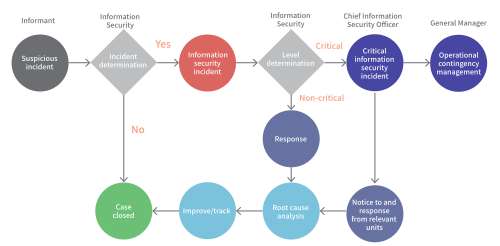
WT has issued a Security-Incident Management Procedure that defines four severity levels and the associated escalation flow. When an incident occurs, the person who discovers it reports the details or security staff perform an incident determination; notifications are then sent in line with the assigned level. If the incident is classified as “major”, it must be reported immediately to the Chief Information Security Officer (CISO), who in turn briefs the General Manager for follow-up emergency-response management.

The IT department must eliminate and resolve cybersecurity incidents within the target resolution time. After closure, it conducts a post-incident review and implements improvement actions to prevent recurrence. If an incident results from an individual employee’s behavior, the root cause and impact are assessed and disciplinary measures are imposed in accordance with work rules.

In 2024, five cybersecurity incidents occurred. All were classified as non-major and involved credential leakage; each was handled and contained immediately, resulting in no impact. None of the incidents led to any compromise of core services or leakage of sensitive data.


WT Information Security Incident Flow Chart


Backup measures when the system is under attack

Local data snapshot Once every hour If the hardware is intact, the fastest way to recover compromised data.
Remote replication Real-time replication to the backup center, plus off-site snapshots When the primary data center suffers a force-majeure event or a failure that cannot be restored immediately, the COO authorizes switching system services to the backup center.
Off-site storage of backup media Daily backup; offline media moved off-site weekly If both the primary data center and the backup center are unable to provide service, data restoration and system rebuild will be carried out from the offline backups.

2024 WT’s Cybersecurity Performance

∙ Two rounds of company-wide cybersecurity-awareness training, plus one intensive session for core-system personnel and managers.

∙ Phishing-simulation campaign: 278,037 emails sent; employee click-through rate 0.7%, comfortably below the 5% industry average target.

Blocked 39,553,348 spam emails and shielded against 1,576,611 malicious emails.

Intercepted 28,782 endpoint-threat events.

Patched 134,736 system and software vulnerabilities.

Earned four additional international cybersecurity certifications and logged 200+ hours of professional training.

2025 cybersecurity management plan

Security-Management Mechanisms Continue to reinforce and improve cybersecurity governance, using scenario-based plans and drills to boost organizational resilience.
Hold a monthly cybersecurity meeting to review internal and external threats, and convene a semi-annual management-review meeting to track improvements.
Security-Control Measures Keep strengthening identity management, micro-segmentation, and visibility to build a comprehensive security infrastructure.
Monitor new technologies for both opportunities & risks, and adjust the architecture and defenses accordingly.
Further enhance SIEM/UEBA (for visibility) and SOAR (security orchestration, automation, and response); leverage AI to analyze system logs and identify potential risks, using automated responses to minimize impact.
Security Awareness & Training ∙ Provide ad-hoc awareness campaigns and training based on real cases to keep employees vigilant; add content on AI deep-fake scams and emerging frauds, including safe-AI-use tips and cautions about unfamiliar sources.
Upgrade cybersecurity staff competencies by continually acquiring relevant international certifications, equipping them to counter evolving external attacks and internal requirements.
Joint Defense & Supply-Chain Collaboration Keep strengthening overall supply-chain security and actively participate in joint-defense forums to obtain the latest threat intelligence.
Continue to meet customer requirements through security assessments, vulnerability scans, and penetration tests.

Combining Sustainable Development and Risk Management

Strengthening the integration of sustainability initiatives and operational risk management

In 2023, WT set up the Sustainable Development Committee to combine sustainable development management capabilities and coordinate corporate risk management. The Committee comprises two functional groups, Sustainable Development Team and Risk Management Team, and takes the operating mechanism over from the Risk Management Committee that it replaced. The Committee is currently made of five members: the Chairman, one Director and three Independent Directors. In 2024, the Sustainability Development Committee convened four meetings, presenting risk management proposals to the Board covering both financial risk management and climate change risk management.

The Risk Management Team is designated to implement risk management. It is mainly responsible for executing overall risk management within WT, formulating risk management policies, structures and mechanisms, establishing qualitative and quantitative management standards, and reporting the risk management implementation status and results to the Sustainable Development Committee.

WT risk management roles and responsibilities

Board of Directors:

The Board of Directors is the supervisor of risk management and the highest governance body. With the objectives of complying with laws and regulations and promoting and implementing risk management, it approves risk management policies, continuously supervises the effective operation of the risk management mechanism. It undertakes the ultimate responsibility of WT’s risk management system.

Sustainable Development Committee:

The Sustainable Development Committee reports directly to the Board and is responsible for reviewing the appropriateness of risk management policies and structures, reviewing major risk management strategies, including risk appetite or tolerance, reviewing management reports on major risk issues, supervising improvement mechanisms, and regularly reporting risk management status to the Board.

Risk Management Team:

The Team is designated to implement risk management and is mainly responsible for executing overall risk management, formulating risk management policies, structures and mechanisms, and establishing qualitative and quantitative management standards.

Auditing Office:

The Auditing Office reports directly to the Board and is responsible for independent supervision and quality assurance, internal control system revision and promotion, and audit planning and execution. The Office is required to submit an annual audit plans based on the risk assessment results every year, and reports on the audit plans implementation status to the Audit Committee and the Board.

Accountable Units:

Each accountable unit is responsible for the actual implementation of risk management and the unit heads are responsible for analyzing, monitoring and reporting the risks within their scopes and ensuring that the risk management mechanism and procedures can be effectively implemented.

WT risk management procedure

1|Risk identification

2|Risk evaluation

3|Risk monitoring and reporting

4|Risk response

Emerging risks in six major types were assessed according to risk management practices

2024 World Economic Forum (WEF) Global Risks Report

2years   10years
Misinformation and disinformation 01 Extreme weather events
Extreme weather events 02 Critical change to Earth systems
Societal polarization 03 Biodiversity loss and ecosystem collapse
Cyber insecurity 04 Natural resource shortages
Interstate armed conflict 05 Misinformation and disinformation
Lack of economic opportunity 06 Adverse outcomes of AI technologies
Inflation 07 Involuntary migration
Involuntary migration 08 Cyber insecurity
Economic downturn 09 Societal polarization
Pollution 10 Pollution

Source:2024 World Economic Forum (WEF) Global Risks Report

In accordance with the 2024 World Economic Forum (WEF) Global Risks Report framework, our risk management system evaluates emerging risks across six critical typologies. The priority risks including economic downturn, extreme weather events, geopolitical conflicts, cyber insecurity, generative AI disruptive technologies, and change in government policies and legislation require ongoing monitoring and active governance

Risk Identification
Economic risks Operational: Market structure and demand, industry development and competition, sales or procurement concentration, product and raw material prices, product development and services, business model changes, patent application and maintenance, intellectual property protection, etc.
Financial: Inflation, financing, liquidity management, exchange rate, interest rate hedging, financial investment, strategic investment, etc.
Environmental risks Operation interruptions caused by extreme weather events or natural disasters
Geopolitical risks Legal compliance, sales or procurement concentration, business model changes, product and raw material prices, and organizational structure adjustments
Technology risks Information security: Failure to ensure information confidentiality, integrity and availability as a result of potential exposure of the information assets to unbearable risks
Technological changes: Development of clean technologies with higher efficiency in response to extreme climate and mis- and disinformation as a result of the rise of generative AI
Social risks Labor shortage
Other risks ∙ Legal compliance: Failure to comply with laws and regulations or deficient contract specifications
Other emerging risks: Viral infections such as COVID-19


Risk Type Risk Identification Attention Risk Factor Current Impact on the Company Countermeasure
Economic risks Inflation, market demand, industry development and competition, liquidity management, financing, forex rate, interest rate hedging, and dividend distribution caused by economic recession* Keep monitoring The extensive end market is closely related to the overall economy. An economic recession will inevitably lead to a decline in demand for electronic products, and thus, a decline in demand for WT’s products. The fiscal and monetary subsidies from governments during the COVID-19 pandemic, as well as the rise in energy and food prices caused by the war in Ukraine, have led to a decline in global economic growth, inflation, and rising interest rates in the postpandemic era, which has caused a decline in WT’s profits. Formulate business strategies based on the overall economic situation and market conditions, improve the overall presence in the electronic components market, continue to expand market share and increase profitability, continue to optimize the operation management system, and strengthen risk management to improve operation efficiency.
Economic risks Operation risks caused by procurement and sales concentration No need Procurement and sales concentration pose a risk of crucial impact on the sales performance if a major vendor or customer is lost. In 2020, WT experienced the termination of its highest-revenue supplier agreement. Subsequently, WT mitigated the revenue impact by deepening collaborations with alternative suppliers. With a diversified base of over 400 vendors and 25,000 customers, there is thus not a concern on excessive procurement and sales concentration. WT is a professional distributor of electronic components, partnering with globally recognized suppliers and customers. Beyond maintaining strong relationships with existing partners, WT actively diversifies its business by pursuing new customers and expanding its product agency lines, ensuring balanced diversification across its supplier and customer base.
Environmental risks Hazards caused by strong typhoons, natural disasters, extreme weather events, heat, and energy instability Keep monitoring Climate change triggers global droughts, snowstorms, typhoons, floods, extreme heat, and energy instability, leading to disruptions in the supply of electronic components. Natural disasters including droughts, snowstorms, typhoons, floods, extreme heat, and energy instability may all potentially impact electronic component manufacturing, physical inventory risks, and inbound/outbound scheduling to varying degrees. Continue implementing globalized deployment strategies by diversifying operational regions and concentration of suppliers and customer to mitigate operational risks arising from extreme climate events in any single region.
Geopolitical risks Geopolitical conflicts lead to compliance challenges, sales/procurement concentration risks, operational model changes, product/raw material price fluctuations, and organizational restructuring. Keep monitoring The electronic components industry, encompassing design, manufacturing, testing, and sales, relies heavily on cross-border collaboration and interdependent relationships. Geopolitical shifts and conflicts introduce significant uncertainty shocks across the entire supply chain. Geopolitical conflicts trigger trade wars, tariff barriers, national security concerns, and regulatory changes, disrupting the electronic components industry through impacts on product supply/demand, pricing, production capacity, logistics, and import/export controls ultimately affecting our operations. Continue implementing globalized deployment strategies by diversifying operational regions and concentration of suppliers and customer to mitigate the impacts arising from geopolitical risks in any single region.
Technology risks 「Information confidentiality, integrity, and availability exposed to cyber insecurity Keep monitoring In recent years, the expansion of cybercrime and information security vulnerabilities has progressively increased the potential for information assets to face intolerable risks, compromising our ability to ensure data confidentiality, integrity, and availability Data breaches may result in significant financial losses, reputational damage, and even disruption to business operations. Cybersecurity incidents can lead to operational downtime and system failures, causing substantial economic impact. Ransomware attacks may force us to pay exorbitant ransoms or face data exposure and customer compensation claims, all resulting in financial damages. Inventory and classify information assets by security level, establish a tiered protection system, conduct risk assessments, and prioritize critical targets for safeguarding. Deploy traffic defense services to mitigate damage from hacker DDos attacks (such as network, dictionary, and brute-force attacks), ensuring the availability of order processing and shipping systems. Strengthen the Advanced Persistent Threat (APT) detection system, patch antivirus vulnerabilities, and reduce zero-day attack risks.
Technology risks Due to supply and demand fluctuations in product sales caused by emerging technology trends Keep monitoring WT specializes in high-technology product distribution, making its business particularly susceptible to revenue fluctuations caused by rapid industry changes and technological evolution that impact product mix. As an electronic components distributor, WT operates on an order-driven model – procuring from suppliers upon receiving customer orders, which inherently minimizes inventory risk. However, the company’s growth trajectory remains subject to its ability to anticipate industry shifts and master emerging technologies like generative AI. WT maintains constant vigilance through its R&D and sales teams to monitor technological and industrial changes that may impact operations. Simultaneously, the R&D team is intensifying efforts to develop AI-enabled solutions and clean technology products, driving both product diversification and sustainability initiatives to ensure stable profitability while advancing environmental stewardship.
Social risks Labor shortage No need The low birth rate makes it difficult to recruit and thus causes a talent shortage. Considering the Company’s current steady growth, there are no significant risks in the short term. WT’s recent cross-border acquisition has expanded its operational footprint across multiple countries. With highly complementary business operations, we enhances work efficiency and revenue growth through resource sharing, while reducing the need for continuous workforce expansion.
Other risks Change in government policies and legislation Keep monitoring Changes in critical industrial policies and regulations across the countries where WT operates may significantly impact our business operations. Governments worldwide are actively promoting high-tech, semiconductor, and high-value-added industries. As WT primarily distributes semiconductor components, current policy and regulatory changes pose no material operational impacts. Furthermore, increasing global policies on energy efficiency and net-zero emissions are expected to positively influence sales of low-carbon products. WT’s legal, finance/accounting, and stock affairs teams keep watch on and dutifully gather market intelligence and legislative changes at home and abroad, and timely consult legal and accounting experts to propose measures in response to major changes in domestic and foreign policies and legislation. The R&D team further develops products with emerging clean technologies to increase sales of low-carbon products.

*For detailed information on risk analysis and management policies related to financial risks in economic category, please refer to the 2024 Annual Report.

Complying with international tax standards and publicly disclose tax information

Taxes are not only a cornerstone of national governments’ provision of local infrastructure and public services, but also an important source of funding to attain global sustainable development goals. To meet changes in global tax environment, increasing complexity in cross-border transactions and global anti-avoidance trends, WT continues to interact and cooperate with tax authorities in countries where it operates.

Facing the trend of international tax equity, WT implements corporate governance and shapes a corporate tax culture by formulating tax governance and transfer pricing policies, while taking into account the overall operational development and the creation of operating profits. The policies are reviewed annually to reflect international tax trends, and the need for revisions evaluated. WT files honestly in accordance with the regulations of each location where it operates, and make proper use of applicable government tax incentives.

WT commits to reducing its tax burden through transparent tax arrangements, ensuring that the Group’s tax strategy aligns with international anti-tax avoidance principles and corporate social responsibility. By implementing lawful and compliant tax planning, WT upholds tax transparency and maintains strong cooperative relationships with local tax authorities to jointly foster a fair and competitive business environment.

In preparations for the upcoming Controlled Foreign Corporation (CFC) system, WT has adjusted its organizational structure to comply with the international anti-avoidance trend for tax fairness, reorganized its substantive operating affiliates registered in countries with low tax burdens, and prudently assessed the impact of the taxation policy on the Group. It also keeps close watch on any legislative news.

Tax irregularities or unethical matters can be reported internally and externally through WT’s exiting whistleblower mechanism. All tax information disclosed in relevant public channels, such as annual reports at the shareholders’ meeting, is derived from financial statements certified by an accounting firm.

WT Tax Policies

01

Compliance with tax regulations

We handle tax matters and file taxes in accordance with tax laws and regulations of each country in which we operate as well as international rules and standards (e.g., the arm’s length principle, OECD regulations, etc.). We pay reasonable tax liabilities commensurate with economic value in the countries in which we operates in order to fulfill our social responsibility.

02

Information transparency

We disclose tax-related information in compliance with financial reporting standards.

03

Reasonable tax saving

We use legal tax incentives and do not engage in tax planning for the purpose of avoiding tax liabilities.

04

Established communication channels

We established a mutually respectful and trustful communicative relationship with tax authorities with whom we can conduct timely clarification of possible tax issues for major transactions.

05

Managing tax risks

Tax implications must be taken into considerations when key company decisions are made. Operating environment and transaction patterns must be analyzed, and established investment structures reviewed to determine their consistency with sustainable tax strategies and management policies, with a view to developing adjustments.


Tax payment situation

WT’s effective income tax rate and cash income tax rate are both higher than Taiwan’s statutory income tax rate of 20% for profit-making enterprises, mainly because the Company’s management retains part of the current year’s earnings without distributing in consideration of the working capital required for the Group’s future operational growth, and is required thus to pay tax for the undistributed earnings. The decrease in the cash effective tax rate in 2024 is mainly due to the timing difference in income tax payments and a significant 128% increase in profit before tax compared to 2023.


2024 income tax payment by region


Taiwan 39%
 
Others (excluding Taiwan) 61%
  2022 2023 2024
Net profit before tax (A) 9,911 5,195 11,835
Income tax expense (B) 2,311 1,217 2,629
Income tax paid (C) 2,376 1,589 712
Book effective tax rate (D)=(B)÷(A) 23.32% 23.43% 22.21%
Cash effective tax rate (E)=(C)÷(A) 23.97% 30.59% 6.02%
(in NTD million)

Digital Transactions & Services

Digital optimization not only improves operational efficiency but also reflects our dedication to delivering low-carbon solutions. 

Continually enhancing digital transactions and information exchange 

WT serves over 25,000 customers and suppliers. By adopting a digital transaction and data exchange operating model, the company significantly enhances employee efficiency across sales and procurement operations. This includes functions such as sales forecasting, customer order creation/modification, delivery schedule responses, and other related processes. These operations are integrated through mutually agreed-upon electronic data interchange (EDI) protocols. In addition, various automation tools are implemented to support manual tasks, aiming to streamline processes and improve overall management efficiency.

Sales Operations
01 Sales Forecasting
02 Pricing Information
03 Customer Order Creation/Modification
04 Delivery Schedule Response
05 Shipping Notification
06 Invoice Information
Procurement Operations
01 Project Design Registration
02 Quotation
03 Purchase Order Creation/Modification
04 Supplier Shipping Notification / Invoice Information
05 Receipt Data
06 Payment
Current status of sales process system enhancements in 2024


Customer Orders Received Through Digital
• Customer sales order creation/modification is conducted through Electronic Data Interchange (EDI) integrated with the document approval system. Upon authorization and verification, delivery schedules are instantly updated in the order system.
• In 2024, seven new corporate clients were onboarded to the digital transaction process.
Customer Delivery Date Response
• In 2024, four new customers began exchanging delivery schedules through digital channels.
• Approximately 6.2% of customers can now access delivery information directly via the website.
Shipment and Related Operations
• Certain customer operations require access to their online platforms. Robotic Process Automation (RPA) has been gradually adopted to streamline repetitive tasks such as Advanced Shipping Notice (ASN) creation, minimizing manual effort and reducing delays and errors.
• As of 2024, over 89,902 tasks have been completed for 10 customers, with the number steadily increasing.
Paperless Invoicing
• Integrated with third-party platforms for direct data exchange, reducing the need for manual input.
• Achieved 100% paperless processing.
• Ongoing process optimization is carried out based on individual customer requirements.
Customer order digitalization outcomes
4.38%
 
2022
5.36%
 
2023
9.58%
 
2024
Digitalization results of RMB invoice processing for reconciliation and payment requests
3.71%
 
2022
77.92%
 
2023
100%
 
2024

Software-assisted automated custom reports to streamline operations and enhance management

In recent years, beyond focusing on enhancing the systemization of supply chain management, the company has also introduced customized automation support modules. Using Excel VBA tools, employees can efficiently convert data into tailored reports, significantly improving work efficiency and value. This practice has become a routine part of daily operations. These tools have been increasingly applied across various functions, including sales, procurement, and other operational areas, contributing to continual improvements in reporting and workflow efficiency year after year.

Number of Improvements via Sales Automation Support Modules


162
2022
238
2023
130
2024

Number of Improvements via Procurement Automation Support Modules


45
2022
123
2023
53
2024

Number of Improvements via Other Automation Support Modules


5
2022
22
2023
7
2024

Plans are in place to begin adopting AI to assist with rapid data identification and extraction.

Current status of procurement process system improvements in 2024


Scope Expansion of Procurement Process Applications

• Rolled out to all business units across the group to strengthen procurement management operations.

Customized Format Automation with Software Support

• Introduced automated modules for customized formats using Excel VBA tools to accelerate the conversion of procurement order changes and delivery date requests into customer-specific formats.

Digital Procurement Transactions

• Continued expansion of B2B/EDI transactions with customers and original suppliers, enabling electronic handling of sales order changes and related processes, with systemized, rapid submission to original suppliers.

Automation of Price Maintenance Operations

• Deployed RPA (Robotic Process Automation) to assist in maintaining procurement pricing information efficiently.

Integrating software automation into procurement systems for enhanced efficiency

The procurement process and order management system enhancements implemented in 2023 have demonstrated significant operational results by 2024. Procurement orders and delivery schedule adjustment requests generated from the process are now integrated with automated support modules using VBA tools to handle customized formatting. This has substantially reduced the number of manual tasks and the time required for order processing.


Customization Rate of Procurement Order Format


95%
2023
95%
2024

Customization Rate of Delivery Schedule Management Format


99%
2023
95%
2024

Note: The customization rate of delivery schedule management formats declined in 2024 due to the integration of Future Electronics into the system.


Procurement price maintenance automation – enhancing efficiency and management

Real-time maintenance of procurement pricing data is a critical element of effective supply chain management. In 2024, the company expanded its digital optimization efforts into this area. While existing systems already support bulk updates by staff, Robotic Process Automation (RPA) tools were introduced to assist in routine operations. Currently, automated processes account for approximately 20% of procurement price maintenance activities. Broader implementation is planned for 2025, aiming to further improve operational efficiency and reduce manual workloads.


Demonstrating year-on-year improvement in digital transactions and information exchange.

With over than 10,000 customers and vendors, WT has introduced an operating model featuring electronic transactions and data exchange to significantly improve employee’s efficiency with digital sales and procurement procedures and with mutually agreed electronic exchange protocols that allow data interfacing. The following table shows the numbers of e-transactions with customers and vendors and their shares in revenue or purchase amounts in the past three years.  Currently, 64% of the group’s revenue and 95% of procurement are handled through digital transaction models.

Electronics sales procedures
01 Sales Forecast
02 Price information
03 PO creation/modification
04 Shipment date reply 
05 Shipping notice
06 Invoice information
Electronic procurement procedures
01 Project design registration
02 Price inquiry
03 PO creation/modification
04 Vendor shipping notice/invoice information
05 Shipment arrival information
06 Payment

% of e-transactions in revenue from customers

20%
2021
30%
2022
45%
2023
64%
2024

% of e-transactions in purchase from vendors

30%
2021
40%
2022
90%
2023
95%
2024


Providing customers with comprehensive services


Customer satisfaction in 2024 reached 89%.

WT’s sales representatives regularly communicate with customers about sales orders, shipment dates and other transactions related matters. There is also a customer complaint mechanism in place for customers to provide feedback about service quality, product shipment quality, or other abnormal events. In order to ensure the overall customer service quality, in 2024, a total of approximately 70 Customer Satisfaction questionnaires were sent to important customers and new customers (revenue coverage rate exceeded 65%). Customer opinions were collected through questionnaires, which will serve as an important basis for WT to continuously improve service quality. The survey results of the five major dimensions showed that 47% were very satisfied, 42% were satisfied, and the overall satisfaction rate was 89%.

Customer satisfaction survey results by dimension %
Highly Satisfied 47%
Satisfied 42%
Neither Satisfied nor dissatisfied 11%
Dissatisfied 0%
Highly Dissatisfied 0%


The satisfied result for the five dimensions as below: 

Product Logistics&Delivery Price&Cost Service Overall rating
93% 91% 72% 94% 94%

Apart from the Price & Cost dimension, satisfaction in all other aspects exceeded 90%. Although satisfaction in the Price & Cost category was only 72%, when including responses classified as “acceptable”, the combined positive feedback reached 99.6%, with only 0.4% expressing actual dissatisfaction. Due to original suppliers’ pricing strategies, there is limited flexibility to influence changes in pricing.

The chart below shows satisfaction results across different dimensions:

In response to dimensions with lower satisfaction and topics of customer concern, we have followed up and implemented corrective actions. Feedback provided by customers has also been incorporated into our operational policies to drive continuous improvement and ensure service quality.


Customer Satisfaction Survey Results by Dimension %


Highly Satisfied


Satisfied


Neither Satisfied nor dissatisfied


Dissatisfied


Highly Dissatisfied

45.15%
48.13%
6.72%
Product
52.24%
38.81%
8.96%
Logistics&Delivery
29.48%
42.91%
27.24%
0.37%
Price & Cost
53.73%
40.30%
5.60%
0.37%
Service
52.24%
41.79%
5.97%
Overall rating


WT has already a customer complaint procedure in place to collect customer feedback about products and services. The complaints are filed to the competent units to analyze the cause, and keep track of improvements. Not only a reply will be given to customers about how the complaint is eventually handled, but internal publicity or training will be strengthened to prevent similar incidents from recurrence.  

Customer complaint possible situations include: logistics delivery, customer relationship service, and product quality 


Customer request
Business Unit Or Operation
Cause analysis
Solving problem
Review and improvement

Implement and Enhance a Sound Corporate Governance Framework

A sound board structure and operational mechanism

The shareholders’ meeting is the highest authority of WT, while the Board of Directors serves as the highest governing body. The Board, led by the Chairman who acts as the chairperson, oversees the achievement of the Company’s operational goals, enhances business performance, provides strategic guidance to the management team, and ensures compliance with relevant laws and regulations, thereby safeguarding the best interests of the shareholders.

WT established the “Corporate Governance Best Practice Principles” to strengthen the Board’s functions. Besides emphasizing Directors’ professional knowledge, skills, and qualities, the Company implements a policy of board diversity, which requires that Independent Directors constitute no less than one-third of all Board seats to ensure governance independence. Competent Directors are elected at the shareholders’ meeting through a candidate nomination system in accordance with the “Rules for Directors Election“.


Functional committees enhancing governance

To optimize the quality of board decisions-making and enhance its supervisory functions, various functional committees are established under the Board of Directors based on their respective responsibilities. These committees assist the Board in effectively reviewing major corporate matters and monitoring the implementation of its resolutions. The functional committees include the Audit Committee, Remuneration Committee, Nominating Committee, and Sustainable Development Committee. Each committee is accountable to the Board and submits proposals for board resolution.

In 2019, WT’s Board of Directors approved the appointment of a Corporate Governance Officer, who is responsible for matters related to Board and shareholders’ meetings, as well as assisting Directors in their orientation, continuing training, performing of duties, and compliance with regulations. For detailed information, please refer to the Implementation of Corporate Governance in 2024.


Composition and functioning of the Board

To meet the management needs of global expansion and promote board diversity, one additional Director was elected at the 2024 Annual General Meeting, bringing the total number of Board members to 9, including 4 Independent Directors. For details on the implementation of the board diversity policy, please refer to the Corporate Governance section on WT’s official website.

The Board of Directors holds at least one meeting per quarter. In 2024, a total of 13 Board meetings were convened, with an overall Director in-person attendance rate of 92.7%, and a 100% personal attendance rate by Independent Directors.

All proposals submitted to the Board in accordance with the 9 categories specified in the “Rules of Procedure for Board of Directors’ Meetings”, including items such as business plans, financial reports, acquisition or disposal of significant assets, amendments to internal controls and key internal regulations, and the issuance of equity-related securities. For details on major resolutions approved by the Board in 2024, please refer to the Major Resolutions under Corporate Governance section on WT’s website.

Composition of WT Board of Directors


Independent Director: 4


Director: 5


Executive Director: 3


Non-Executive Director: 6


Female: 3


Male: 6


Aged 51-60: 5


Aged 61-70: 1 


Aged 71-70: 3

Article 20 of WT’s “Corporate Governance Best Practice Principles”
Basic requirements and values: Gender, age, nationality and culture, etc. It is preferred that female Directors make up at least one third of the Board.
Professional knowledge and skills: Professional backgrounds (such as law, accounting, industry, finance, marketing or technology), specialized skills, and industry experience, etc.


To mitigate potential conflicts of interest arising from the Chairman concurrently serving as a managerial officer, as well as other Directors with conflicts of interest, WT follows Article 15 of the “Rules of Procedure for Board of Directors’ Meetings” regarding the recusal mechanism for Directors with conflicts of interest. WT discloses details of proposals involving Directors’ interests in its annual report, including the content of each proposal, the names of the Directors involved, and the reasons for their recusal.

Each year, WT arranges for Directors to attend professional training programs offered by external institutions, such as the Securities and Futures Institute. In addition, the Company irregularly provides updates on corporate governance and regulatory developments to enhance the Board’s operational effectiveness. In 2024, WT held four Director training sessions, all conducted entirely in English in response to globalization trends.

Lecturer Course Title Course Content
Mr. Colley Hwang (Founder and Chairman of DIGITIMES) Global ICT Supply Chain and the Evolved Semiconductor Industry Provided in-depth analysis on the outlook trends of the global ICT supply chain and the evolved semiconductor industry, the exponential growth and business opportunities of the industry, the evolution of division and decentralized manufacturing, as well as issues related to artificial intelligence and geopolitics.
Mr. Chih-Cheng Hsieh Assurance Partner and Accounting Consulting Service Leader, PricewaterhouseCoopers How to read and analyze financial statements Analyzed business fundamentals and growth potential, explored ways to create operational value, and learned to identify early warning signs of risk and prevent financial misstatements by studying case examples of other companies’ financial statements.
Mr. Daniel Liang General Manager of TCIC Global Certification LTD A Global Trend on AI Governance  Provided an overview of global trends in AI governance, with an analysis of the key areas of focus by the International Organization for Standardization (ISO) in developing AI management systems, and shared the identification and mitigation of security threats and privacy risks associated with AI systems.
Mr. Sean Lee Chief Information Security Officer, SinoPac Holdings X-Tech:The Strategy and Thinking of Cybersecurity  Provided a systematic introduction to information security and corporate information security management. Drawing on the lecturer’s extensive practical experience, the session highlighted the evolution and trends of information security and emphasized the importance of prevention.

In addition, Independent Directors actively participated in discussions within various functional committees and provided recommendations to the board, thereby reinforcing corporate governance practices.

For detailed information on the composition of the Board of Directors, the Audit Committee, and other functional committees in 2024-including members’ age ranges, professional backgrounds, terms of service, and concurrent positions in other companies, as well as data on Board meeting attendance, continuing training, and the implementation of conflict of interest recusal, please refer to Chapter 2: Corporate Governance Report in WT’s 2024 Annual Report.


100% attendance by Audit Committee members

The Audit Committee is composed entirely of Independent Directors, with four members serving in 2024. Mr. Kung-Wha Ding served as both the convener and chairperson. The Committee convenes at least once per quarter. The CPA is required to communicate with the Independent Directors throughout the audit process, including planning, auditing, and reviewing the results. The Internal Auditing Officer also reports on the implementation status and other matters to the Audit Committee at every non-emergency meeting. In 2024, a total of 13 Audit Committee meetings were held, with a 100% in-person attendance rate by all members. For further details, please refer to the “Operation of the Audit Committee in 2024”. In response to regulatory amendments, the “Audit Committee Charter” was revised in 2024 to strengthen the authority of Independent Directors and enhance the procedural framework of the Audit Committee.


Audit Committee Oversight Functions

01 Adequate presentation of the Company’s financial statements
02 Appointment, dismissal, and assessment of the CPA’s independence and competence
03 Effective implementation of the Company’s internal controls
04 Compliance with relevant laws and regulations by the Company
05 Risk management of existing or potential risks faced by the Company


Improved executive compensation management system

The Remuneration Committee is composed of three Independent Directors. The purpose of the Committee is to take into account the Company’s operational performance, make objective and professional recommendations to the Board, and assist the Board in implementing and evaluating the Company’s overall compensation and welfare policies. In addition, the remuneration of directors and executives is determined and reviewed in accordance with the Director and Functional Committee Remuneration Payment Guidelines and the Regulations Governing Compensation Payment of Executive Officers as necessary to strike a balance between sustainable management and risk control. In 2024, a total of six Remuneration Committee meetings were held with all members having a 100 percent in-person attendance rate. For detailed information, see the Operation of the Remuneration Committee in 2024.

The Regulations Governing the Share Ownership of the CEO and Non-Executive Directors in 2023 to encourage the CEO and non-executive Directors (excluding Independent Directors) to hold an appropriate amount of the Company’s stocks for a long period, so that their performance could be consistent with shareholders’ interests and they could share the Company’s operating results with shareholders.

The Compensation and Clawback Policy for Executive Officers was formulated in 2023 and adopted by the Board in 2024, which formally include environmental and social operational performance into the Executive Officers’ compensation evaluation criteria. In particular, environmental and social performance each account for ten percent respectively. In addition, to prevent executives from engaging in behaviors that exceed the Company’s risk appetite for higher remuneration, the Policy also stipulates that in cases where a manager’s misconduct leads to a major violation of laws or regulations, and causes a significant risk loss or a need for recompiling financial statements, the Company will recover the excess rewards and significant risk loss incurred by current or former managers due to their misconduct. The content and reasonableness of the above-mentioned remuneration and the difference to be recovered must be reviewed by the Remuneration Committee before submission to the Board for discussion and approval. The remuneration system shall also be reviewed in a timely manner based on operating situation and relevant laws and regulations.

Performance Evaluation Indicators for Executive Officers, including the CEO, President, and Vice Presidents

Recipient Performance Indicators Calculation (Weighting) Description
Executive Officers, including the CEO, President, and Vice Presidents Key Financial Indicators 60% Performance evaluation shall be conducted based on the following financial indicators, assessed against the annual plan and compared over multiple years.
∙ Net Operating Revenue
∙ Gross Profit
∙ Operating profit
∙ Net Income
∙ EPS
Departmental / Project Performance 20% Performance evaluations are conducted based on the implementation status of each department or project, such as the effectiveness of risk management, corporate governance, or information security management.
Environmental Performance 10% Efforts to promote the Company’s environmental sustainability, including reducing carbon footprint and improving resource efficiency.
Social Performance 10% Continued promotion of diversity, equal opportunity, and social contribution initiatives.
Note: Based on the weighted results of all performance indicators, individual performance is further considered for adjustment. All related compensation matters are reviewed by the Remuneration Committee and submitted to the Board of Directors for resolution. The compensation system is also reviewed and adjusted as necessary in accordance with business conditions and applicable laws and regulations, in order to support the Company’s goal of sustainable operations.

In 2024, the General Manager’s total annual pay was 18.4 times of the median of that of the employees (excluding the General Manager) who have worked for more than six months in 2024 at the Taiwan headquarters and the four subsidiaries including Morrihan, Nuvision Technology, Maxtek Technology, and Techmosa. After calculating the year-over-year percentage change in compensation for each employee, the values were ranked and the median was identified. The ratio of the General Manager’s compensation growth rate to the median compensation growth rate of employees (excluding the General Manager) was 0, as the General Manager’s total compensation remained unchanged in 2024. The median year-over-year growth rate of employee compensation was 6.44%.

Note: Only the employees who have been employed throughout both 2024 and 2023 were taken into account for the median calculation to prevent discrepancies between the statistical median and the actual situation caused by issues such as incomparability of the pay increase of those who have not received a full year’s remuneration in both years (including new hires in 2023 or departures in 2024), and the absence of remuneration increase data for the new hires in 2024.


Both the Sustainable Development Committee and the Nominating Committee comprise a majority of Independent Directors.

The Sustainable Development Committee was established at the end of 2023 to supervise and manage the implementation of sustainable development. The Committee is composed of at least three members appointed by the Board, with more than half must be Independent Directors. In 2024, the Committee consisted of five members: the Chairman, one Director, and three Independent Directors. The first convener and chairperson is Director Kerry Hsu. Two functional teams were established under the Committee: Sustainable Development Team, led by Chief Sustainability Officer Willie Sun, and the Risk Management Team, led by Accounting Officer Cheryl Yang. These teams work together to integrate risk management mechanisms into the promotion and implementation of sustainability initiatives.

The Nominating Committee was also established at the end of 2023 to assist the Board in the fair and transparent selection and evaluation of suitable candidates for directorship, as well as to assess the independence of Independent Directors. The Committee shall be composed of at least three Directors appointed by the Board, with more than half must be Independent Directors. In 2024, the Committee consisted of three members: the Chairman and two Independent Directors. The first convener and chairperson is Chairman Eric Cheng. The Nominating Committee also assists the Board of Directors in reviewing the performance evaluations of the Board itself, its functional committees, and individual Directors, as well as in planning and implementing Director development programs.


WT formulated the “Rules for Board of Directors Performance Assessments” in 2016, which clearly stipulates that the Board shall be evaluated at least once a year, and that its performance must additionally be assessed once every three years by an external, professional, and independent institution or a team of external experts or scholars. The assessment results must be reported to the Board and used as a reference for determining individual Directors’ remuneration and nomination for the Board re-election.


Four Board of Directors Assessment Aspects

01 The Board’s professional competencies
02 The effectiveness of the Board’s decision-making
03 The Board’s attention to and supervision of internal controls
04 The Board’s attitude toward corporate social responsibility


In 2023, the Taiwan Institute of Ethical Business-an external professional institute, was commissioned to assess the Board’s performance. The Institute and its executive experts maintain independent and have no business relationship with WT. The assessment was conducted through document reviews, questionnaires, and on-on-one interviews with the Directors in four major aspects. Two concrete recommendations were made: (1) Enhance the Independent Directors’ understanding of the operations of overseas subsidiaries and strengthen their interaction with the executives; (2) Continue to implement the Company’s sustainable management goals. The internal and external assessment results were reviewed and approved at the Board meeting held on February 16, 2024, which agreed to optimize WT’s corporate governance implementation by making the recommended improvement. For further details, please refer to “The implementation of external board performance evaluations”.

The execution results of the 2024 internal performance evaluations for Individual Directors, the overall Board of Directors, and each functional committee of WT were approved by both the Nominating Committee and the Board on February 25, 2025. For more detais, please refer to “Chapter 2: Corporate Governance Report” in WT’s 2024 Annual Report.


Rigorous internal audits to ensure fairness and impartiality

❙ Independence: The internal audit unit is an independent unit under the Board of Directors and reports directly to the Board. The appointment and dismissal of the Chief Internal Auditor shall be approved by the Audit Committee and resolved by the Board of Directors. The appointment, dismissal, performance evaluation, and remuneration of internal audit personnel shall be handled in accordance with the Company’s Corporate Governance Best Practice Principles. Such matters shall be submitted by the Chief Internal Auditor to the Chairperson for approval, and performance evaluations shall be conducted annually.  

❙ Purpose of internal audit: The purposes of internal audit are to assist the Board of Directors and managers in inspecting and reviewing defects in the internal control systems, measuring operational effectiveness and efficiency, and to make timely recommendations for improvements to ensure the sustained operating effectiveness of the systems and to provide a basis for review and correction.  


Propose annual audit plans

 
Perform routine audits / Perform special audits
 
Issue audit reports and track improvement results
 
Present audit reports to the Audit Committee for review
 
Attend Audit Committee and Board of Directors, and present audit plans implementation and results
 

Strengthening institutional agility through self-supervision 

❙ Internal audit activities: Internal audit work is primarily conducted in accordance with the annual audit plan approved by the Board of Directors. This plan is formulated based on identified risks and includes routine audits. Special audits may be conducted as necessary. After implementing each audit, the Internal Audit Department shall present the audit reports and follow-up reports, and submit them for review by the Audit Committee before the prescribed statutory date. The audit supervisor shall attend regular Audit Committee and Board meetings to report on the status and results of audit execution.

❙ Self-assessments: All internal departments and subsidiaries are to conduct self-assessments once a year and implement the Company’s self-monitoring mechanism. The design and implementation of the internal control system are adjusted in a timely manner in response to changes in the environment. The self-assessment reports are reviewed by internal auditors, and the self-assessment results and audit discoveries provide a basis for the Board and General Manager to produce Internal Control System Statements.  

❙ Management of sustainability information: WT has established an internal control system for the management of sustainability information in accordance with the “Regulations Governing the Establishment of Internal Control Systems by Public Companies”. The preparation of the sustainability report is incorporated into the internal control system for proper oversight and management. The Company’s management fulfills its duty of care as a prudent administrator to ensure the quality of the sustainability report. 



Corporate Governance Milestones in 2024

∙ Ranked in the top 5% of all TWSE/TPEx-listed companies and top 10% among electronic companies with a market capitalization over NT$10 billion in the 11th Corporate Governance Evaluation (fifth consecutive year) 
∙ Independent Directors completed an average of 11.3 hours of continuing training; all Directors averaged 10.3 hours.
∙ Across 13 Board meetings, the average in-person attendance rate of Independent Directors was 100%, and 92.7% for all Directors.

∙ Audited parent company only and consolidated financial statements were announced within 56 days after the fiscal year-end (statutory deadline: 75 days); quarterly consolidated financial statements reviewed by CPAs were announced within an average of 37 days after each quarter-end (statutory deadline: 45 days).
∙ Held 12 physical or online investor conferences.
∙ WT cooperated with the Zhonghe Precinct of the New Taipei City Police Department to promote anti-fraud awareness to shareholders attending the 2024 Annual General Meeting.
∙ WT held its 2024 Annual General Meeting in a hybrid format, enabling virtual participation to advance shareholder engagement and strengthen corporate governance.

Continued growth in 2024! 61% increase in the Group's operating revenue

WT's consolidated net operating revenue was NT$959.4 billion in 2024, an increase of NT$364.9 billion or by 61%, from 2023. The net profit was NT$9.2 billion in 2024 and EPS was about NT$8.13 based on weighted average outstanding shares.

Operating Revenue and Profit, 2020-2024 (in NTD million)

  Operating revenue
  Net profit for the year


353,152
 

447,896
 

571,197
 

594,519
 

959,432


3,795
 
7,855
 
7,600
 
3,978
 
9,206

2020
2021
2022
2023
2024

Generative AI (GenAI) to accelerate long-term demand growth in the semiconductor market

In 2024, the global semiconductor industry continues to face headwinds from a weak macroeconomic environment, high inflation, and elevated interest rates. Despite these challenges, WT has demonstrated strong resilience by capitalizing on the surge in semiconductor demand driven by GenAI, leading to significant revenue growth. Looking ahead, amid global economic uncertainties due to geopolitical tensions, the rapid advancement of GenAI technologies, and ongoing transformations in the electronics supply chain, WT will leverage its integration with Future Electronics to further strengthen its global footprint in the electronic components market. With the goal of continuously expanding market share and improving profitability, WT will also enhance operational management systems and risk controls to boost efficiency. By deepening its ability to deliver added value across the electronic components supply chain, WT aims to build a sustainable operating foundation.


Revenue percentage of sustainable economic activities increased by 2.64 percentage points

WT systematically manages the environmental impact and application areas of its product portfolio, with a focus on supporting customer transitions to sustainable product design. Through targeted services and technical support, the company enables customers to integrate energy-efficient and low-carbon solutions across diverse application markets. In alignment with the Sustainable Economic Activities Recognition Reference Guidelines (Version 2), published by Taiwan's Financial Supervisory Commission on December 31, 2024, WT assessed its existing product applications to identify those that qualify as sustainable economic activities. These include solutions in low-carbon transportation, high-efficiency industrial equipment, and renewable energy infrastructure. In 2024, revenue derived from sustainable economic activities accounted for 14.07% of total revenue – an increase of 2.64 percentage points from 2023. These categories reflect not only compliance with regulatory expectations but also alignment with global sustainability trends. Looking ahead, WT is committed to further investment in clean technologies and low-carbon solutions. The company has set a target to increase the share of revenue from sustainable economic activities to 20% by 2030, supporting its long-term ESG strategy and enhancing its contribution to global decarbonization efforts.


To be determined depending on product applications 49.26%
None-sustainable economic activities 36.67%
Sustainable economic activities 14.07%


Sustainable economic activities:


Low-carbon transportation technology applications 60.24%
 
High energy efficiency equipment manufacturing and high energy efficiency technology applications 16.10%
 
Professional services on building energy efficiency 15.46%
 
Renewable energy installation 5.20%
 
Other Sustainable economic activities 3.00%

Wonderful every WT – WT Microelectronics'30th anniversary

One Step Further Towards Global Presence with Future

WT Group announced in September 2023 that it had signed a formal agreement to amalgamate Canadian Future Electronics Inc. in all cash at an enterprise value of US$3.8 billion. The amalgamation of the two highly complementary companies in terms of product types, customer portfolio, global presence, and logistics center layouts is expected to create long-term and sustainable growth value for all stakeholders, including customers, suppliers, employees and shareholders.

WT and Future will jointly shape a world-class leading electronic components distributor with its dual headquarters in Taipei and Montreal. This amalgamation will create long-term and sustainable value for all stakeholders, and marks a significant milestone for WT's journey towards a world-class enterprise.

Innovative design for the exclusive 30th anniversary logo

The exclusive logo, with the W in the classic logo turned into number 3, symbolizes an imagined flying bird. The circuit board shading and highlights on the bird's body represent a profound industrial significance and great expectations, that it will fly high and far around the world for a prosperous future.

The logo has a blue and green color scheme, with blue representing honesty, trust, and professionalism, and green representing rebirth, hope, and growth. The two colors are also colors with a sense of technology. The blue-green gradient symbolizes the company's constant growth and evolution on a steady and solid foundation.


Naming contest for WT's 30th anniversary special exhibition

The sense of involvement makes a successful event. “Every Wonderful Chapter WT Wrote” was selected from 308 submissions, for the name faithfully describes the journey in WT's first 30 years. Indeed, every chapter of the story, be it a struggle, joy or surprise, is wonderful.

“Every Wonderful Chapter WT Wrote” WT Microelectronics'30th anniversary

In order to further unite the employees and build a solid foundation for sustainable development in the future, a series of events were organized to help our people to know ourselves better. In particular, a 30th anniversary gala was held at the end of the year, and a special exhibition in the offices. The exhibition of precious materials relating to the group's history, core values, and vision, was like a time machine, taking the visitors back to 1993. An interactive well-wishes was also put up, and the special exhibition features a quiz and lucky draw activity. The quiz offered prizes including WT limited edition OMAR whiskey gift sets, tickets and vouchers for well-known art and cultural exhibitions.

WT Microelectronics'30th anniversary gifts for employees

The employees have been playing the most significant role in moving the company forward. As a token of appreciation, a portable tea cup sets set along with a fashionable and comfortable Polo shirt were given to every employee. In addition, the portable tea cup gift box also provides engraving services for employees with more than 15 years of service to express our gratitude to our employees.

Committed to ethical standards and a transparent and responsible corporate culture

Integrity is WT’s most important core value and business philosophy. The Group’s executives and employees must abide by clear moral standards and code of conduct, and do their utmost to fulfill WT’s commitments to shareholders, banks, customers, employees, vendors and other suppliers. It is also the core requirement for WT to gain competitive advantage and act correctly.

In 2020, WT formulated the Social Policies and Code of Conduct, United Nations Anti-Corruption Policies, and United Nations Sustainable Development Goals Policies. In 2023, it released Anti-corruption, Anti-bribery and Anti-money laundering Policies, and revised the Ethical Corporate Management Best Practice Principles in line with global corporate governance and anticorruption
concepts and frameworks. The social policies and codes of conduct apply to the Board members, the Group’s employees, independent contractors, suppliers, and all those who do business with WT.

The Ethical Corporate Management Best Practice Principles, Procedures for Ethical Management and Guidelines for Conduct, Codes of Ethical Conduct, and Supplier Code of Conduct that the Board has adopted are available in either the Corporate Governance section or Sustainability Report section of the Company’s official website and the Intranet in Traditional Chinese, Simplified Chinese and English. Information on Ethical Values and Professional Code of Conduct and Insider Trading Prevention Education and Advocacy are made available on the Intranet for all employees’ reference. In addition, relevant personnel are also appointed to participate in lectures and symposiums held by industrial associations or professional groups, so as to strengthen the Group’s ethical operation policies.


LINK:

Major Policies

UNCAC Anti-corruption Policy

WT SDGs Policy

Social Policy and Code of Conduct


Regular refresher training on Code of Conduct to raise integrity awareness among all employees

An annual refresher training is given to all employees of the Group to ensure they are aware of applicable rules and regulations. In 2023, a total of 2,566note in-service employees were required to receive refresher training and 224 new hires to receive on-board training on Ethical Values and Code of Conduct. All of them have completed the course and passed the test (100% pass rate), with an accumulated attendance of ethical management training reaching 1,486.5 hours.

Note: After the merger with Excelpoint in 2022, the management systems are set to be integrated in phases, and the ethical management training is scheduled to be integrated in 2024.


WT conducts annual ethical management training for its employees, including full-time staff, contract workers, and subcontractor personnel. In 2023, the training covered 2,790 full-time staff members (accounting for 99.47%) and 15 subcontractor personnel (accounting for 0.53%). As of December 31, 2023, there were no contract workers in the company, resulting in no training participation from this category.

Implementing Ethical Business Practices and Strengthening Risk Management

To enhance the management of ethical business practices, “Ethical Management Team” has been established, comprising representatives from Human Resources, Legal, and Audit departments. The Chief Human Resources Officer (CHRO) serves as the highest authority within the team. Each business unit is responsible for the formulation, execution, and oversight of ethical business policies, management measures, and reporting procedures in accordance with their respective roles, ensuring the effective implementation of the Code of Ethical Conduct.


Ethical Business Practices and Anti-Corruption Management

Integrity is one of the core values of WT. We have established robust mechanisms for ethical business practices and anti-corruption management, which are implemented through the following actions:

Implementation Measures:

1.The Ethical Management Team conducts annual training sessions for all employees, including new hires, to promote awareness of ethical business practices and anti-corruption policies and regulations.

2.Operational units regularly monitor and review anomalies, such as conducting periodic supplier account verifications and visits, monitoring illicit transactions, investigating shell companies, detecting unusual payments, and identifying abnormal changes in logistics and delivery locations.

3.High-risk operations are prioritized as key audit items in the annual audit plan.

4.The CHRO reports the execution results to the Board of Directors on an annual basis.


WT has established stringent control mechanisms for business activities and operational procedures that are potentially prone to unethical behavior. In addition to regular monitoring and review of processes with higher corruption risks to prevent improper benefits, bribery, or other unethical conduct, internal auditors prioritize high-risk operations in the annual audit plan based on risk assessments. This approach aims to reduce the likelihood of unethical and corrupt practices. Furthermore, all departments and subsidiaries conduct annual self-assessments of their internal control systems to ensure the effectiveness of their design and implementation.


The Ethical Management Team reports the results of the previous year’s ethical management implementation to the Board every year. At the Board meeting on January 31, 2024, training on Ethical Values and Code of Conduct, status of professional ethical violation reports, and prevention of insider trading were reported to assist the Board in evaluating whether the ethical management prevention measures established by the Company are operating effectively.

No involvement in political-related initiatives and no political donations

WT has not made any direct or indirect donations to political activities, political parties/associations/NGOs, politically related organizations, individual politicians, or other voting/referendum initiatives in the past five years. The amount of political donations has been NT$0. In addition, WT has not lobbied on specific issues or conducted related activities with interest representative groups.

Compliance with laws and regulations

WT strictly abides by all applicable laws and regulations at each operating location. As of the end of 2023, the Taiwan headquarters was fined NT$50,000 in accordance with Article 24 of the Labor Standards Act after a labor inspection discovered failure to timely complete the handling of an overtime application. Subsequently, the management was reminded to fulfill their management obligations and care for employees at all levels. The working hours management
and overtime tracking mechanisms were strengthened, attention is paid to employees’ labor rights and physical and mental health protection. No violation of laws or regulations were found in economic aspect (investment, securities, taxation, etc.), environmental aspect (air pollution, wastewater, waste, etc.), or social aspect (human rights, disabilities, injuries, etc.) in any operating sites, and thus no resulting penalties from the competent authorities.


Whistle-blower ID and the investigation process are kept highly confidential

WT has a whistle-blowing system specified by the provisions of Article 23 of the Ethical Corporate Management Best Practice Principles and Article 21 of the Procedures for Ethical Management and Guidelines for Conduct. Anyone who suspects or discovers a violation should take the initiative to report it to Independent Directors, supervisors, internal audit supervisor or other appropriate person.

WT’s whistleblower channels include an internal whistleblower mailbox and a whistleblower section on the official website for whistleblowers to report illegal conduct of company personnel. The Auditing Office is responsible for accepting external reports, forwarding them to the heads of relevant units for investigation, and following them up until the cases are closed. The identity of the whistleblower, the content of the report, and the investigation process are all kept confidential. A complete record of the case acceptance, investigation process, and results is kept for five years. In addition, an independent hotline, dedicated mailbox, and special handling procedures have been set up for sexual harassment complaints in order to protect the privacy of the complainant. A serious breach of integrity is subject to removal or dismissal in accordance with relevant laws or management regulations, depending on the circumstances of the case.


Reporting Channels

Mail to “14F.,No.738, Zhongzheng Rd.,Zhonghe Dist., New Taipei City 235603 , Taiwan (R.O.C.)”

WT Website:”Report Ethical Violation in the Workplace

Receiving Unit

Auditing Office

Protecting corporate assets with enhanced overall supply chain information security

In order to ensure the confidentiality, integrity and availability of WT’s information assets, to comply with the requirements of relevant laws and regulations, to protect them from internal and external deliberate or accidental threats, and to meet business needs, information security policies have been formulated as a basis for compliance to effectively and reasonably mitigate operational risks. The policies are applicable to WT and its affiliates, subsidiaries that are 100% directly or indirectly owned, controlled by WT, subsidiaries that sell or provide services for the Group, all personnel of the mentioned organizations, outsourcing service providers, student workers, and visitors, etc. In addition, information security clauses have been added to external contracts.

According to the 2023 World Economic Forum (WEF) Global Risk Report, “Widespread cybercrime and cyber insecurity” is ranked as the 8th risk within 2 years and 10 years. With increasingly complex cyber espionage or cyber crimes, such as loss of privacy, data fraud or data theft, compromised information security protection may lead to data leakage and blackmail risks, and even core system disruptions, causing serious business losses and damaged goodwill.

In view of the growing importance of information security and increasingly rampant cyber attacks, WT’s Information Security Department is headed by Chief Information Security Officer at the level of deputy general manage. The Department, composed of one dedicated director and two dedicated personnel, is responsible for information security risk management, incident investigation, system vulnerabilities disclosure, and information security system evaluation and introduction, etc. Following the establishment of the Sustainable Development Committee, information security management strategies and results will also be presented to the Sustainability Development Committee before being submitted to the Board. There were no major information security incidents involving sensitive information leakage or information service disruption in 2023, and no financial losses were caused to customers or suppliers due to the information security incidents.

Information security certificates are used as a mechanism to check and continuously improve information security professional capabilities. In 2023, a total of six international certificates in information security governance, information security management and auditing were obtained, including CEH Master, CISA, and ISO 27001 Lead Auditor. In addition, WT has joined joint information security defense organizations such as Taiwan CERT/CSIRT Alliance and Taiwan Chief Information Security Officer Alliance to strengthen the joint information security defense system by identifying relevant information security trends and sharing threat intelligence. At a meeting of the Taiwan Chief Information Security Officer Alliance in 2023, WT shared its supply chain security practices, explaining how to help vendors improve their information security capabilities and strengthen overall supply chain security protection.

Regular refresher training to raise employee safety awareness

While conventional information security protection boundaries are no longer effective, employee security awareness has become an important part of information security management. From 2021, randomly selected phishing templates are sent out every month for social engineering exercises. For employees who click on phishing emails, there is a system in place to require refresher training, notify their direct supervisors, and keep track of the training results, in order to reduce information security threats caused by employees lacking information security awareness.


Implementing information security management system to upgrade corporate information security resilience

Based on ISO 27001 and NIST CSF, WT introduced and strengthened its security control measures, constantly evaluates its information security protection mechanism from point, line and plane, and develops different technical combinations. It also adopts defense-in-depth approach and security-by-design principles to further strengthen multi-layer security in eight aspects, which are management, data, endpoint, application, network, third-party supply, business continuity and emergency response, intelligence integration and joint defense, so as to reduce impact of information security risks to acceptable levels and continuously monitor residual risks. In addition, ISO 27001 verification and red team exercises were performed by third-party institutes to verify the effectiveness of management mechanisms and system security protection, and strengthen information security resilience. WT is ISO/IEC 27001:2013 and CNS 27001:2014 verified via TCIC, with certificates valid until 2025. The information security measures it took in 2023 with regard to the five NIST CSF core functions were as follows:

Five major measures to improve information security control and network protection

WT adopts defense-in-depth approach, security-by-design principles, and continuous threat exposure management (CTEM) concept to identify assets that are vulnerable to attack paths. WT manages risks to reduce the probability and impact of threats. Its information security control measures in 2023 include :

Response to customers’ information security concerns

WT relies heavily on information systems and online transactions to conduct business with its upstream and downstream partners. WT regularly returns information security self-assessment questionnaires to customers and vendors, and communicates with them on specific information security issues from time to time. In addition, to meet customer requirements, a third-party information security service provider is commissioned by a customer to perform host vulnerability scanning and penetration testing to ensure supply chain information security.

Business continuity and emergency response

24/7 information security monitoring

WT has a dedicated information security mailbox to receive information security notifications from external sources to inform internal security improvement.

Regular information security incident exercises to ensure recovery in the shortest possible time

To enhance corporate resilience and maintain high availability of the information system, tests and exercises are conducted at least once a year according to the business continuity plan of the information security management system. The exercise involves a simulated incident in the main system, switch of the main data center operation to offsite, detailed record of the exercise and results, and subsequent review and follow-up of continuous improvement.

In 2023, the number of unexpected power outages decreased by 25% relative to 2022. Nevertheless, WT continued to conduct a power supply abnormality exercise to ensure that emergency generators can be activated immediately and normal operation of the facilities and systems can be maintained. The exercise proved that the emergency response procedures were appropriate and all the facilities and systems were in normal operation.

Setting up information security notification system for hierarchical management and rapid response

WT has security incident management procedures in place, which classify information security incidents into four levels and specify notification procedures accordingly. The individual who spots an information security incident reports it to IT or information security personnel who then determines whether it is an incident and its level before forwarding accordingly. A critical incident will be immediately reported to the Chief Information Security Officer, who will pass it on to the General Manager for emergency response.

The information department must remove and resolve information security incidents within the target time, and conduct reviews and improvement measures after the incident is concluded to prevent its recurrence. If the assessment of the incident cause and impact find that the incident was caused by an employee’s behavior, he or she will be punished in acordance with the work rules.


A total of four information security incidents occurred in 2023, all of which were non-critical. Three of them involved leaked passwords, which were all responded to and handled immediately and caused no impact; and the other involved an external network anomaly experienced by WT’s network service provider, and the traffic was instantly redirected to the backup route. No core services, confidential or sensitive data, or confidential information related to transactions with customers or vendors were leaked in these incidents.